
Moffat Court Docket Searches
Begin with the court name on the ticket or notice. A town ordinance case belongs to Moffat Town Hall. State traffic or misdemeanor matters go to Saguache County Court. Felonies and general-jurisdiction cases land in District Court. The town offers no dedicated municipal case lookup. Keep the citation number, party name, date, issuing agency, and the document you want close at hand. The official Moffat site is the town's starting point. For a state hearing, use the Saguache filter. For a full state history, ask the Combined Court clerk for the ROA.
- Identify Moffat Municipal Court or a state court on the notice.
- Ask Town Hall for an ordinance file or current setting.
- Use the state docket for a Saguache state hearing.
- Request an ROA or filed paper when a calendar entry is not enough.
- Confirm the date and required appearance with the filing clerk.
Moffat's 2008 Court Ordinance
Moffat's document archive holds a 2008 ordinance that established Municipal Court. Later files touch the court in 2009, the municipal judge in 2012, and judge pay. Together they trace a legal framework over time. They do not publish a current Moffat docket. Nor do they list a present sitting cadence. That gap trips people up. A historical ordinance can explain authority, duties, and office structure. Yet it cannot manufacture a current judge or court date. A live Moffat court record must come from the town office itself. The official Moffat documents page holds that archive and offers a CORA request route.
Inside the Moffat Municipal Court
Moffat Municipal Court handles town ordinance matters. The town publishes nothing about the current judge, session schedule, caseload, online calendar, ticket search, or payment process, so Town Hall is the practical source for current status. The office sits at 401 Lincoln Avenue, Moffat, Colorado 81143, with mail to P.O. Box 353. Call 719-256-4538. Published weekday hours run 9:00 a.m. to 3:00 p.m. When you call, ask whether the municipal court is convening, who serves as clerk, and how a public file can be inspected or copied.
Moffat Court Records via CORA
Moffat falls under the Colorado Open Records Act. Use a CORA request when a direct clerk ask does not resolve a municipal document need. Name the Moffat case or citation. Give the date range, the party, the ordinance, and the specific document. Request inspection or copies rather than a broad sweep of all court material. A focused request helps town staff locate a paper record. It also helps them decide what must be withheld or redacted. It builds a clear trail in a town with no public portal. Never send a state court request to Town Hall. The Combined Court clerk holds those files. The official Saguache Combined Court virtual room page shows the state court's remote hearing setup.
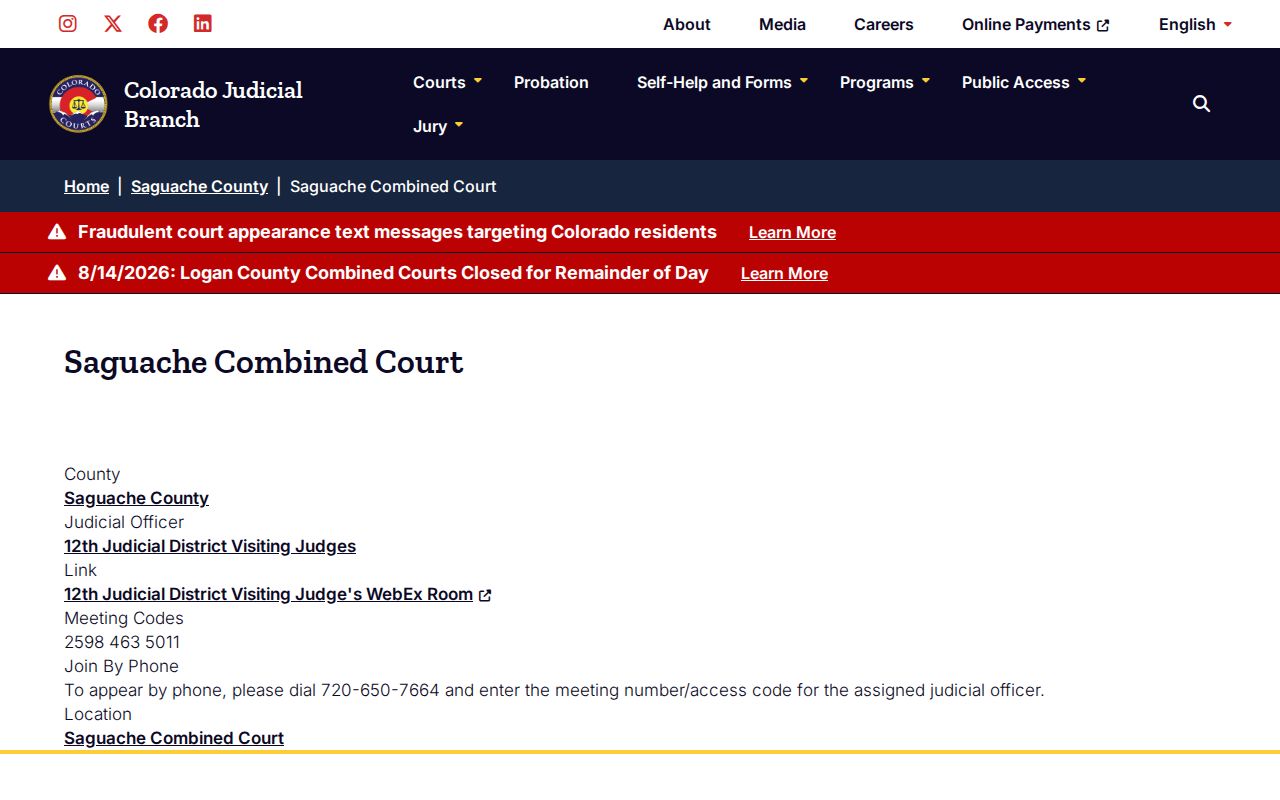
That state virtual room matters only when Moffat-related litigation is actually filed in the Saguache state courts. Remote access must also be approved first.
Finding Moffat Court Dates
The town posts no current municipal calendar. A municipal setting has to come from the citation, a town notice, or direct confirmation from Town Hall. State settings are different. The Colorado Judicial Branch docket lists date, time, duration, case number, hearing type, location, appearance type, and courtroom for each state hearing.
| Date | The date confirmed by Moffat Town Hall or the state filing court. |
|---|---|
| Time | The stated start time, not an inferred regular docket hour. |
| Location | The municipal venue or Saguache Combined Court. |
| Judge | The current judicial officer confirmed for that setting. |
| Setting Type | The plea, pretrial, trial, review, or other named event. |
Never derive a Moffat court date from an ordinance year. If two notices disagree, call the filing court. Watching a livestream is observation only and does not count as an appearance.
Moffat's Paper-First Court Trail
Moffat counted 108 residents in the 2020 Census. A town that small, with a thin web footprint, rewards a direct records chain over repeated online searches. Begin at Town Hall for a municipal ordinance file. If staff point to CORA, follow that route, and move state matters to the Combined Court clerk.
Those facts are context, not a caseload. The town publishes no filing count, so population size cannot predict how often court meets.
Moffat Traffic Ticket Lookups
The citation issuer decides the path. A Moffat ordinance citation starts at Town Hall. A Colorado state traffic citation goes to Saguache County Court. The town offers no citation pay portal and posts no payment procedure. For a state ticket, the official Colorado payment search takes a case number, ticket number, or name plus date of birth. The court must be selected first. Anyone contesting a charge should not pay as a lookup step. Payment can acknowledge liability and waive the right to contest. The citation's date controls. County routes appear in Saguache County traffic court records.
Moffat Municipal and County Records
A municipal file and a state ROA cover different cases. The Moffat town file reflects ordinance proceedings. The Saguache Combined Court ROA reflects a County Court or District Court chronology. The elected county Clerk and Recorder keeps neither judicial register.
| Moffat-related matter | Custodian | Best route |
|---|---|---|
| Town ordinance | Moffat Town Hall | Phone, counter, or CORA request |
| State traffic or misdemeanor | Saguache County Court clerk | Docket plus clerk request |
| Felony or general civil | District Court clerk | ROA or document request |
| Federal case | Filing federal court | PACER or federal clerk |
Ask for a named record. "Moffat docket" may mean a calendar, an ordinance file, or a state Register of Action, and each has a different source.
How Moffat Cases Reach the County
Moffat Municipal Court handles only local ordinance matters in town. Anything under state law goes one level up. Traffic and misdemeanor cases land in Saguache County Court. Felonies and other general-jurisdiction cases go to District Court. Both of those state courts operate through Saguache Combined Court.
Docket flow: Moffat Municipal Court › Saguache County Court › District Court
Whether Moffat's municipal court is a court of record is not clear from what the town has posted. That question decides where an appeal goes. A court-of-record appeal goes to District Court within 35 days. A non-record appeal goes to County Court within 14 days and can bring a new trial. Before relying on either route, confirm the court's current status with Moffat. Then read the state appeal instructions.
Moffat Court Appeal Confirmation
The official appeal page publishes JDF 222 and a $70 filing fee. It also lays out the split between record review and a new-trial route. The page cannot answer what the town has not posted, such as Moffat's current record status. Nor does it cover the town's clerk process. When an appeal is on the table, call early.
The municipal appeal instructions from the state lay out both routes in plain terms.
Those instructions show the common routes. Only Moffat Town Hall can say which one fits its actual municipal court.
Who Can See Moffat Court Records
Moffat records open to the public within limits set by state law, local custody, redaction, and sealing orders. A request does not need an online docket behind it. By the same token, an old ordinance posted online does not open every case paper.
Key rules:
Colorado Open Records Act governs many local government records.
Chief Justice Directive 05-01 governs state judicial records.
C.R.S. §19-1-304 restricts specified juvenile records.
Ask specifically for the public portion. A missing Moffat result may just mean no online system exists, not that the case was dismissed.
Moffat Court Status Is Not Assumed
A 2012 judge ordinance does not name the current judge. The 2008 establishment ordinance does not prove any weekly or monthly session. And a town documents archive proves nothing about online case access. These distinctions keep Moffat court records anchored to facts rather than inference.
For contrast, the 12th Judicial District's competency docket announcement shows how the state publishes a named program. That only happens when one is truly active.
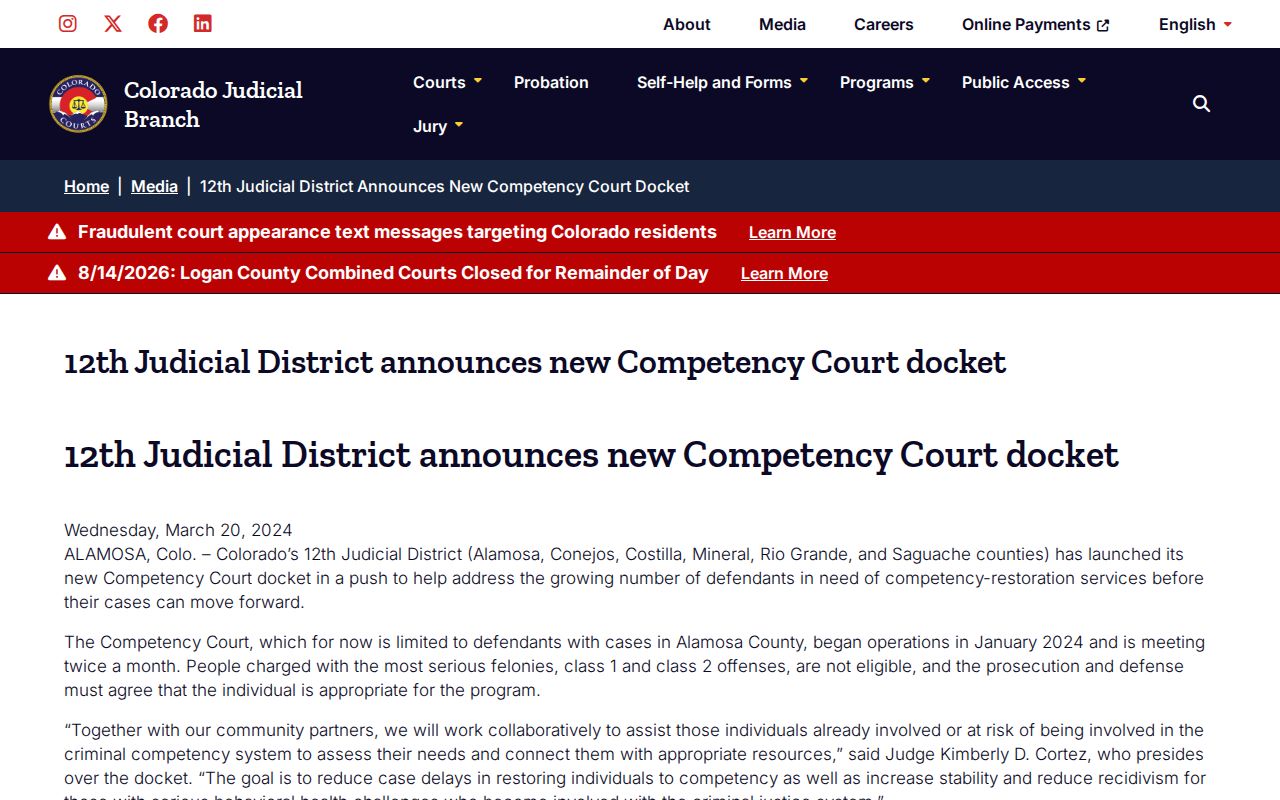
Moffat posts no comparable municipal program announcement, so confirming with Town Hall stays necessary.
Moffat Records Outside Colorado Courts
Federal cases run through federal clerks. They use PACER, not the Moffat municipal or Saguache state systems. Appeals from federal District Court ordinarily head to the Tenth Circuit. This route only applies when a matter is actually filed in federal court. The official Tenth Circuit site describes that tier's work.
The Tenth Circuit marks the outer court tier. It should not be used to search an ordinary Moffat ordinance citation.
Confirming a Moffat Court Record
Start with the basics. Confirm the court, the citation or case number, the date, and whether an appearance is required. Municipal questions go to Moffat Town Hall. Its window is 9:00 a.m. to 3:00 p.m. on weekdays. State questions go to the Saguache Combined Court clerk. There the register of actions, or ROA, holds the full history if you need it. Comparing the docket entry against the latest court notice catches errors fast.
A dead-end search proves nothing. Moffat publishes no dedicated docket, so an empty result does not mean no case exists. A narrow records request is the dependable route through this paper-first system. Add a direct call to the clerk.
Keep two questions apart when you request a municipal file. First ask whether the matter is filed and when it is set. Then name the exact paper you need, whether a complaint, citation, order, minutes, or disposition. That spares the staff from guessing what "court records" means. It also gives you a clear answer worth keeping.
A state case number unlocks more than a name does. Colorado numbers pair a four-digit year with class letters and a sequence. T usually means traffic, CR criminal, and CV civil. Entering those exact parts in the Judicial Branch docket search beats guessing at similar names. An event can fall outside the calendar window. The Moffat-related state case can still sit in the ROA.
Copies and certified copies serve different jobs. An ordinary copy may settle a personal question about your case. A certified copy carries clerk authentication, which some uses demand. Ask Moffat Town Hall what authentication it can give for a municipal paper. Ask the Combined Court about certification for a state filing. A saved image of an ordinance archive is never official proof of where a case stands.
Moffat Court Record Timing
Requesting records does not pause a hearing or appeal deadline. If the citation date is close, call the issuing court first. Then follow its instructions while the request moves forward. Write down the date, the staff contact, and the response. For a state matter, check the current docket entry. Pair it with the latest notice. For a municipal matter, ask Moffat directly. Ask whether a new notice has issued.
That contact log resolves conflicts without inventing a schedule from old town documents. It also separates two clocks. One is the time needed to locate a Moffat paper. The other is the time allowed to appear, pay, contest, or appeal. When a deadline matters, only the filing court can confirm it.
Moffat Docket Search Check
Check the citation first. Then compare any town response with the filing court's latest notice before trusting a Moffat result. Save the case number and contact date. This check pays off later. It helps a Moffat records request reach the right custodian without repeating a broad search.
For state matters, compare the Saguache calendar with the ROA when the history matters.