
Bonanza Court Docket Searches
The issuing agency comes first. Read it off the notice. If the matter is a Bonanza ordinance case, pull a current city contact from the Colorado Department of Local Affairs Local Government Information System and ask how the municipal record is kept; the official Bonanza site is not a dependable place for court details. A Colorado state ticket or area misdemeanor belongs to Saguache County Court, while a felony or general-jurisdiction case goes to District Court. Both sit inside Saguache Combined Court. Have the citation number, the name, the issue date, the agency, and the exact record you want close at hand before you call.
- Identify the court printed on the Bonanza citation.
- Use the official DOLA directory to locate the current city contact.
- Ask directly for the municipal setting or record-request process.
- Use the Saguache docket for a state hearing.
- Confirm all dates with the filing court or clerk.
Bonanza Court Records for Seventeen
Bonanza counted 17 residents in the 2020 Census. That makes it the smallest of the county's five incorporated cities. The number is local color and nothing more. It reveals no court schedule, caseload, or shared-service plan, and no official source supplies those facts.
A town of this size leaves a thin digital trail. That is not proof ordinance cases never happen. Go through official contact and the issuing court for any Bonanza record.
Inside the Bonanza Municipal Court
Colorado law lets cities and towns run municipal courts for ordinance violations. Bonanza publishes no current judge, clerk page, sitting schedule, courtroom, or caseload figure. Nothing shows whether it shares services with another government. Nothing shows how often a municipal session convenes. Keep those gaps in view. A requester who borrows another town's hours, address, judge, or process is guessing. Use the DOLA directory to reach a current Bonanza contact. Then ask plainly who keeps an ordinance record, where a session would sit, and whether requests come by inspection, email, or mail.
Bonanza Has No Court Portal
Bonanza publishes no official docket, citation search, calendar, or payment portal. Typing a name into a search box again and again will not conjure one up. Skip the commercial instant-record sites too. Direct contact is the only real next step.
Quick answer: Web silence does not prove no Bonanza case exists. Use the issuing court and an official city contact.
Make the question narrow. Ask whether citation number X is filed as a Bonanza ordinance matter, what the next setting is, and how the public record can be requested. A local official with those three details can route the inquiry instead of guessing where it belongs.
Finding Bonanza Court Dates
No Bonanza session schedule is published. A city court date, if one exists, comes from the citation, a clerk notice, or direct confirmation from an official. Borrowing a recurring court day from another municipality is a mistake. When the notice names Saguache County Court, check the state docket. Then call the Combined Court clerk.
| Date | The date on the current Bonanza or state court notice. |
|---|---|
| Time | The confirmed start time, not a guessed local cadence. |
| Location | The site supplied by the issuing court. |
| Judge | The current officer confirmed for the case. |
| Setting Type | The appearance, plea, trial, or review identified in the notice. |
The free Saguache state calendar can list up to six months of settings ahead. It is not a complete Bonanza or state case history. For the full chronology, request the ROA.
Bonanza DOLA Contact Route
Small municipalities sometimes have thin contact pages. The Colorado Department of Local Affairs Local Government Information System is the official fallback. Find Bonanza, verify the current contact details, and make a targeted request. Write down the date. Note the person who gives you instructions. Your request should name the citation or ordinance, the person involved, the date range, and the exact document sought. It should ask whether the city holds the record or another public office provides the service. That keeps a Bonanza docket inquiry anchored to current official information. It avoids a court structure imagined from general law.
Bonanza Traffic Ticket Lookups
Match the ticket to its court. A Bonanza ordinance ticket starts with the city contact found through DOLA. A Colorado state traffic ticket starts with Saguache County Court. The issuing court named on the ticket settles any doubt. The town offers no online pay tool or local fine schedule. For a state ticket, Colorado's payment search takes a case number, ticket number, or a name with date of birth. Choose the court first. Paying can acknowledge liability. It also waives your chance to contest. Anyone disputing a charge should follow the summons. Confirm the court date first. The state workflow is laid out in Saguache County traffic court records.
Bonanza and State Court Records
Municipal and state files live with different offices. A city ordinance record sits with the local custodian that Bonanza names. County Court and District Court case files sit elsewhere. They belong to the Clerk of Court at Saguache Combined Court. The elected county Clerk and Recorder keeps no judicial case files.
| Bonanza-related record | First contact | Reason |
|---|---|---|
| City ordinance matter | Bonanza contact via DOLA | Local custody must be confirmed |
| State traffic or misdemeanor | Saguache County Court | County Court has state jurisdiction |
| Felony or general civil | Saguache District Court | District Court has general jurisdiction |
| State filed document | Combined Court clerk | The free docket has no document images |
Say exactly what you want. A precise Bonanza request states whether you seek a court date, a docket entry, an order, a complaint, or a certified copy.
How Bonanza Cases Reach the County
An ordinance matter follows the Bonanza municipal route when such a case is filed there. A state traffic or misdemeanor case lands in Saguache County Court. Felonies and general civil matters go to District Court. Saguache Combined Court houses both state trial courts.
Docket flow: Bonanza Municipal Court › Saguache County Court › District Court
One question shapes every Bonanza appeal: is the municipal court a court of record? The answer sets the deadline. A record court sends appeals to District Court within 35 days. A non-record court goes to County Court within 14 days. Bonanza has not settled that status in public. Confirm it and the receiving court first. Then follow the state appeal instructions.
Bonanza Court Appeal Questions
Bonanza appeals start with form JDF 222 and a $70 filing fee. Add any appeal bond the case requires. The official instructions draw one line that matters: some appeals are reviewed on the existing record, while others get a fresh trial. Because Bonanza posts so little publicly, call before any deadline passes.
Three questions settle most of it. First, is the municipal court a court of record? Second, which clerk takes the notice of appeal, and does a transcript or designation exist? Third, court services may be shared. Confirm which location and which county actually receives the filing. Never guess from a small population or a quiet website.
Who Can See Bonanza Court Records
Just because Bonanza posts no court records online does not mean they are closed. Local records can still be requested under the Colorado Open Records Act. What you get depends on the character of the record. Redactions and other lawful restrictions apply too. State judicial case records follow a different rule, Chief Justice Directive 05-01, rather than CORA.
Key rules:
Colorado Open Records Act governs many city records.
Chief Justice Directive 05-01 governs state court-record access.
C.R.S. §19-1-304 restricts specified juvenile court records.
Sealed files and protected personal data stay off limits even when the rest of a case file is public. Ask the Bonanza or state custodian for the public portion of a court record, and let the clerk apply the access rules that govern it.
Bonanza Court Law and New Bills
Municipal court authority comes from current Colorado law and local action. It never comes from a web guess. A bill can spark real debate yet change nothing. A pending proposal does not alter an existing Bonanza court process on its own. Before you rely on any measure for a docket or record request, confirm it passed. Also confirm it took effect.
The Colorado General Assembly page for SB26-018 shows the current status of that bill.
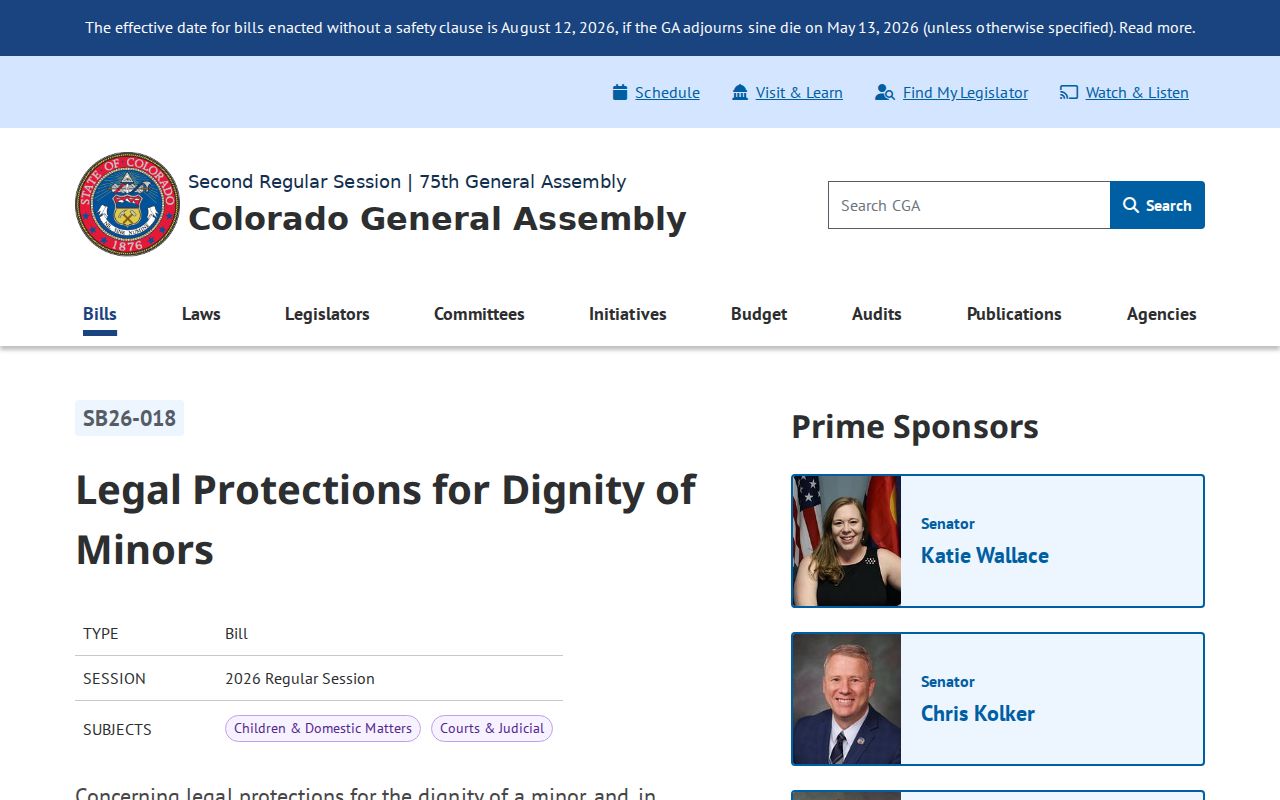
A bill is only a bill. Until it passes, the statutes and local rules that govern a live Bonanza case are the ones already on the books, and a docket search should treat any proposal as context rather than law.
Bonanza Record Request Sequence
Start with DOLA. Give them the citation number and ask who keeps the file. Then send a narrow written request to that office. If the answer points to a Saguache state case, change course. Use the Colorado record request form or go to the Combined Court clerk. Avoid pressing Bonanza for a file it does not hold.
For a state case, the clerk can supply an ROA, ticket, complaint, order, or certified copy. Fees and access limits apply. Reach the clerk by phone, email, mail, or in person. The state detour deserves only a brief mention on a Bonanza city page. It matters whenever the issuing court is not municipal.
Confirming a Bonanza Court Record
Confirm before you rely on anything: the issuing court, the file number, the current date, and any required appearance. Keep the original ticket, and note every official contact and response. If a state result does not appear, widen the date range and request the ROA. If a Bonanza ordinance matter is missing online, skip the hunt and call the local contact. The city posts no portal. Never assume a dismissal, a shared court, or no court at all. Bonanza's thin digital docket makes a documented clerk chain essential. The office holding the original Bonanza court record is the final word on access and status.
Use exact words when you contact Bonanza. "Docket" may mean the next Bonanza court list, while "case record" may mean the complaint, an order, or the final result. Ask whether the matter has been filed, when the next Bonanza setting occurs, and which office holds the document you want. Precision helps when staff time and web resources run short.
A state answer changes the workflow. Record the full Colorado case number. It normally combines a four-digit year, a class code, and a sequence. Then search the Saguache calendar with those parts. A T class often marks traffic, CR criminal, and CV civil. The calendar may list a future hearing. It will not hand you the complaint, prior orders, or the complete state chronology tied to a Bonanza matter. For those papers, contact the Clerk of Court at Saguache Combined Court. Use the official webform, email, phone, mail, or the counter. Request a Register of Action when you need event history; request the named pleading or order when the document itself matters. Bonanza cannot produce a state file just because the conduct happened near the city.
A certified copy is a separate choice. A plain copy may be enough to read a record, while a certified state copy carries clerk authentication and costs more. Ask the Bonanza custodian what official form exists for a city record, and ask the Combined Court clerk about state certification. Never treat a saved web image as an official court record. Finally, keep deadlines apart from access requests. A pending Bonanza citation or appeal still demands compliance with the date on the notice. A record request moves along. Filing a CORA request does not postpone court. If a Bonanza setting is unclear, contact the issuing court at once and save the response.
Bonanza Court Contact Log
A simple contact log keeps a Bonanza court records request from stalling. Note the date the Bonanza citation was issued. Write down which Bonanza office or court was named, each time you called, and the exact Bonanza record you asked for. Save every email reply with your notice. If Bonanza sends the matter to Saguache Combined Court, write down the transfer and the state case number. Work from that number going forward. Without this chain, the thin Bonanza web presence can turn into a dead end fast.
Precise wording helps too. The Bonanza calendar tells you when court is set, while the case file shows what was filed. A disposition entry records how the matter ended. An appeal record preserves what the lower court did. Ask the clerk for one clearly defined item at a time. That makes access quicker and cuts out needless docket search work.